This is the online shop of Beauty Luxury, where you can browse products, request a quotation, and place an order.
Applicable requirements
The service is provided by Beauty Luxury S.r.l. and is an e-commerce service. It is subject to the accessibility requirements of Annex I, Sections III and IV, point (f), of Directive (EU) 2019/882, transposed into Italian law by Legislative Decree No. 82 of 27 May 2022. The sections below describe how the service meets those requirements.
How the site works
Every page can be used with a keyboard alone. The first link on each page skips to the main content. The element you are on is always outlined, and menus, drawers, and dialogues return you to the control that opened them when they close.
Display settings, linked at the top of every page and in the footer, change text size, text spacing, link underlining, and contrast; your choice is stored only in your browser.
Accessibility features
Perceivable
Contrast (minimum): Where text sits on a solid background, it stands out clearly enough to be read with reduced vision, at the levelWCAGrequires. Where text sits on a photograph, the high-contrast and plain views in the display settings give it a solid background.
Resize text: Text can be resized up to 200 per cent without loss of content or functionality.
Text spacing: Line, word, and letter spacing can be increased without loss of content or functionality.
Images and colour: Images that carry meaning have a text alternative, and colour is never the only way information is given.
Operable
Every function can be reached and used with a keyboard, focus follows the reading order and stays visible, nothing flashes, and moving content can be paused.
Understandable
Every page declares its language, navigation and controls stay consistent from page to page, and form fields have visible labels with errors described in words.
Robust
Interactive components expose their name, role, and state to assistive technologies.
Buying and paying
Account creation, sign-in, quotation requests, checkout, and payment meet the points above.
Product information
Where a manufacturer provides accessibility information about a product, we publish it on the product page.
Customer support
Customer service provides information about the accessibility of the service and its compatibility with assistive technologies by telephone (+39 0541 648566), by email (info@beauty-luxury.com), andby chat.
Privacy
We do not use tracking techniques that could infer a user's disability.
How conformity is maintained
We test the site againstWCAG2.1 Level AA, using clause 9 ofEN 301 549V3.2.1. We run automated checks whenever templates, components, stylesheets, or checkout change, and review the site manually at regular intervals.
This statement read aloud
Use the read-aloud button on this page to have this statement read to you.
Turkish Bath at Home: What You Need to Install One
A prefabricated cabin needs 220-230 cm of clear height, a waterproof floor, a drain and a dedicated circuit. What to check before choosing a model, and how it differs from a sauna.
There are two different routes to a Turkish bath at home, and it is worth knowing which one you are looking at. The traditional one is built in masonry: constructed on site, with building work, waterproofing, tiling and a shaped ceiling. It is the project most people picture, and it comes with a building site's timescales and costs.
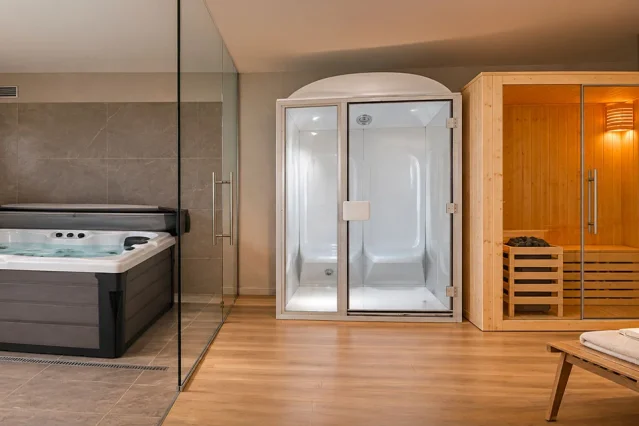
The other is the prefabricated cabin, which is what this guide covers because it is what we make: it arrives ready to assemble, fits into an existing room and needs no masonry work. What it does need is a clear height of at least 220-230 centimetres, a level and waterproof floor, a drain and a dedicated electrical circuit. The steam generator goes in a dry room, no more than three metres from the cabin.
I'll show you what is actually required, how it differs from a sauna, and which constraints decide whether your bathroom can take one. It is an assessment you make with a tape measure before looking at models, because ceiling height rules out more installations than anything else.
A Turkish bath and a sauna are not the same thing
This is the most common confusion, and it has practical consequences for the plumbing and wiring.
A Turkish bath works at low temperature and saturated humidity: around 45 °C with humidity close to 100%. The heat comes from steam produced by a generator that turns mains water into vapour. So it needs a water supply, a drain and a vent.
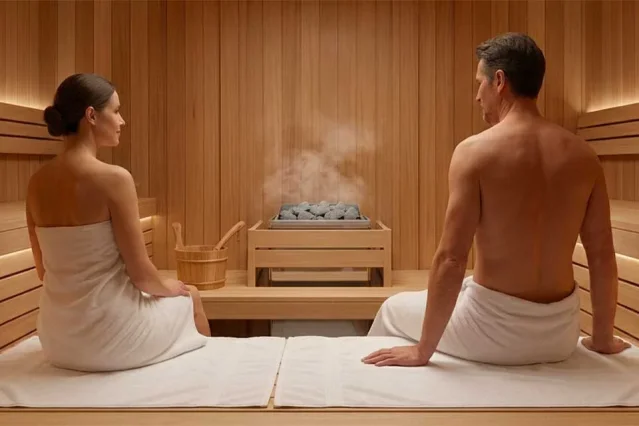
A Finnish sauna works the opposite way: high temperature and dry air, up to 90 °C with very low humidity. The heat comes from a stove heating lava stones. No mains water, but more electrical power.
Everything else follows from that:
services: the Turkish bath needs water plus drainage, the sauna only electricity
materials: acrylic and glass in a Turkish bath, timber in a sauna, because timber does not last in saturated humidity
how it feels: 45 °C wet feels hotter than 90 °C dry, which is why people who cannot tolerate a sauna are often fine in a Turkish bath
session length: longer in a Turkish bath, shorter and repeated in a sauna
If you are choosing between the two, the useful question is not which is better but which room you have: a room with a drain and a water supply points to the Turkish bath, a dry room without drainage to the sauna. On how a sauna is used, and the etiquette around it, there is the guide on sauna naked or in a swimsuit.
Ceiling height is the first constraint
A prefabricated cabin is 225 centimetres tall on the four-seat models and up, 215 on the two-seat. The room needs at least 220-230 centimetres of clear height, and there is no negotiating it: below that, the cabin does not fit.
It is the constraint that rules out most installations, so measure it first. Measure the usable height, net of suspended ceilings, beams, trunking and recessed lights: the lowest point is what counts, not the average height of the room.
Floor and space
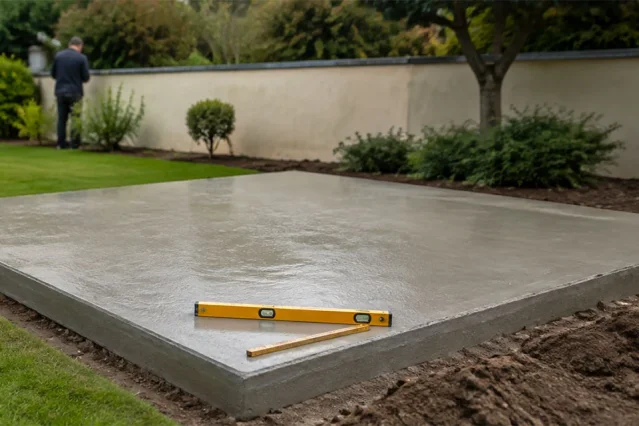
The floor must be level, flat and waterproof, within a tolerance of two millimetres per metre. An out-of-level floor twists the panels and compromises the seal on the glass door.
On footprint, the models cover different situations:
two seats, the BL-2B steam cabin: 120 by 130 centimetres, which fits an ordinary bathroom
four seats, the BL-4B: 130 by 190 centimetres
six seats, the BL-6B: 190 by 190 centimetres
Add space for the door to open and access to the technical side. Weight is not the issue it is with a hot tub: a two-seat cabin weighs 118 kg empty, so no domestic floor has any difficulty with it.
Water, drainage and vent: the three connections
Water. The generator feeds from the mains through a half-inch pipe, maximum pressure 0.2 MPa. If your water is hard you need a softener, because limescale builds up on the elements and shortens their life: it is the most common cause of failure on this kind of machine.
Drainage. A half-inch pipe with a minimum 2% fall to the sewer, and it must be kept separate from the cabin drain for thermal safety reasons: the generator discharge carries water at high temperature.
The steam vent. It has to reach outside the room through a copper pipe angled 3 to 4 degrees downwards, maximum three metres, with the diffuser about 300 millimetres above the floor. Without a vent the humidity stays in the room and ends up in the walls.
The generator does not sit inside the cabin: it goes in a dry, ventilated, frost-free room within three metres of it. That detail shapes the choice of room as much as ceiling height does, and it is one people discover late. The full procedure is in the installation sheet from our technical support.
The electrical supply
Power depends on the model: the generator on a two-seat cabin is 3,000 W, on four-seat models and up it is 6,000 W. The largest models reach 10.5 kW.
That means, as with a heated hot tub, that a 3 kW domestic supply, the standard rating in Italy, is not enough except for the smallest model, and not even for that if anything else in the house has to stay on. Standard ratings vary by country, so check what yours is. Any uprating has to be requested before you buy.
In every case you need a dedicated circuit with its own residual current device, installed by a qualified electrician. Electrical installations in humid environments are covered by IEC 60364-7-703, which sets out the protection zones and the requirements for components. This is not the part to improvise on or to save money on.
A real installation: the stone bathroom
One of the installations we describe most often was also the tensest. The client had a bathroom clad in Java stone and wanted a cabin fitted into it, with a constraint that left no margin: the cabin went where the original door of the room had been, so every measurement had to be right first time.
What you learn from a job like that is that the problem is never the cabin, which is a prefabricated unit with known dimensions: it is the surroundings. In a stone-clad room you cannot correct a two-centimetre error by shifting a tile, and every hole drilled in the wrong place is permanent. That is why the survey comes first, and why it is done with the installer rather than alone with a tape measure.
Stone, incidentally, works well: it handles humidity and is unaffected by steam. Timber, which is the norm in a sauna, would not last as long in a saturated environment.
Can you convert an existing shower?
It is a recurring question, and the answer depends on what you mean.
There are shower enclosures and columns with a steam function: shower cabins with a small integrated generator that produce steam in a reduced volume. They work, but they are a different category of product from a dedicated cabin: smaller volume, different warm-up behaviour, and the shower remains the main function.
Converting an ordinary shower into a Turkish bath by adding a generator, on the other hand, is not a workable route: it lacks the seal against saturated humidity, the shaped ceiling that stops water dripping on you, the vent and the right materials. Steam in an enclosure not designed to contain it ends up in the bathroom walls.
How it is used, and for how long
A Turkish bath is not used at random, and the numbers are lower than many people assume. The usage guidance from our technical support gives temperatures by experience level: 35-40 °C for beginners, 42-48 for regular use, 48-55 only for people used to heat. Not above that.
A session lasts 15 to 30 minutes depending on habit, and the system shuts down on its own after 45. From switch-on it takes 5 to 10 minutes before steam starts being produced: this is not a shower, it has to be turned on in advance.
Before: a two to three minute warm shower, dry off completely, half a litre of water in the preceding half hour, and no heavy meals in the two hours before. After: a cool but not cold shower, fifteen minutes of rest in a robe and another half litre of water. Rehydration is not a detail: in a saturated environment you sweat without noticing, because the sweat does not evaporate.
Maintenance, and why it depends on your water
The routine part is simple: acrylic surfaces with a neutral detergent and a microfibre cloth, seals cleaned weekly, the steam diffuser cleared of limescale with white vinegar diluted in water (one to three). Never abrasives, alcohol, acetone or ammonia on the acrylic.
The part that really matters is descaling the boiler, and the interval is not fixed: it depends on how hard your water is.
soft water, 0-15 °f: every 12 months
medium, 15-25 °f: every 6 months
hard, 25-40 °f: every 3 months
very hard, above 40 °f: every 2 months
This is the same reason I said above to check water hardness before buying: between one service a year and one every two months there is a real difference, and a softener pays for itself. Add a monthly check of the automatic drain and an annual service by a technician: full intervals are in the maintenance sheet.
Who should not use one
Saturated humidity puts the cardiovascular and respiratory systems under load, and the contraindications for a Turkish bath are not the same as for a hot tub: there is no immersion here, so hydrostatic pressure and buoyancy do not apply, while the respiratory side weighs much more.
The safety sheet from our support lists among the absolute exclusions: pregnancy without explicit medical approval, severe heart disease, heart failure, uncontrolled high blood pressure, unstable angina, a heart attack in the last six months, serious arrhythmia, severe respiratory insufficiency and severe uncontrolled asthma, uncontrolled epilepsy, fever or acute infection, deep vein thrombosis, severe varicose veins.
A second list calls for medical advice before use rather than exclusion: controlled hypertension, diabetes, thyroid conditions, mild controlled asthma, dermatitis, circulatory disorders, ongoing medication. Add claustrophobia, which in a closed cabin full of steam is not a matter of temperament.
You get out immediately, without waiting for the session to end, at any sign of dizziness, nausea, breathing difficulty, chest pain, palpitations, cold sweating or confusion. This is not a list to read once: it is the reason you do not go in alone the first time.
Frequently asked questions
What is the difference between a sauna and a Turkish bath? A sauna is dry heat up to 90 °C with low humidity, a Turkish bath is wet heat around 45 °C with humidity near 100%. The services differ (water versus electricity only), the materials differ (acrylic versus timber) and so does the sensation: wet heat feels more intense at the same reading.
Masonry or prefabricated? They are different products. Masonry is built to measure and fits any room shape, but it is a building site: construction work, waterproofing, tiling, the time and cost that go with it, and it stays there permanently. A prefabricated cabin has fixed dimensions and precise requirements, and in exchange it goes in within days, needs no masonry and can be removed. If the room has the height and the services, prefabricated solves it; if the room is an awkward shape or you want a particular finish, masonry is the only route.
How much space does a Turkish bath need at home? A two-seat cabin takes 120 by 130 centimetres, but the deciding constraint is height: at least 220-230 centimetres clear, measured at the lowest point of the room.
Can it go in an ordinary bathroom? Yes, if the room has the height, a level waterproof floor, a drain and a way to vent outside. The generator, though, goes in a separate dry room within three metres.
Can you convert a shower into a Turkish bath? Not by adding a generator to an ordinary shower: the seal, the vent and the materials are not there. There are shower enclosures with a built-in steam function, but they are a different product from a dedicated cabin.
What electrical power is needed? 3,000 W for the two-seat, 6,000 W from four seats up, to 10.5 kW on the largest. A standard 3 kW domestic supply is not enough except for the smallest model, and a dedicated circuit with a residual current device is required regardless.
How long do you stay in? 15 to 30 minutes depending on habit, at 35-40 °C if you are new to it and 42-48 for regular use. The system shuts down by itself after 45 minutes. Allow for warm-up too: 5 to 10 minutes from switch-on before steam arrives.
How much maintenance does it need? Weekly cleaning of the surfaces with a neutral detergent, never abrasives or alcohol. The significant item is descaling the boiler, and that depends on water hardness: from once a year with soft water to every two months with very hard water. Plus an annual service by a technician.
Sauna first or Turkish bath first? If you have both, the usual order is sauna first and Turkish bath after, because dry heat prepares the body for sweating and wet heat closes the cycle more gently. There is always a cooling phase between the two.
What to do, in order
Measure the clear height of the room at its lowest point: below 220-230 centimetres the cabin does not fit, and everything else becomes irrelevant.
Check that the floor is level and waterproof, within two millimetres per metre.
Work out where the generator goes: a dry, ventilated, frost-free room within three metres of the cabin.
Check your water hardness and plan for a softener if it is high: it is the leading cause of element failure.
Have a qualified electrician prepare the dedicated circuit with its RCD, after checking whether your supply rating is sufficient.
The most common mistake is choosing the model before measuring the ceiling. Height is the one constraint no workaround gets around, and it is worth checking on day one rather than last.
If you want a feasibility check on your own room, our customer service will look at measurements and services before you order, and the available models are in the Turkish bath category. Who we are and the experience behind this guide is on the about us page.
Standards: IEC 60364-7-703, electrical installations of buildings, requirements for rooms and cabins containing sauna heaters. National implementations vary: in Italy the corresponding reference is CEI 64-8 part 7.
Catalogue figures in this guide (dimensions, seats and weight) are read from the product pages and update with the catalogue: what you see is the current value. Weights shown are dry weights. The installation requirements summarised here apply to the prefabricated cabins in our catalogue and do not replace a design by a qualified professional: electrical and plumbing work belong with qualified trades, and standard domestic supply ratings differ by country. Guidance on who should not use a Turkish bath is provided for information and does not replace medical advice.
 Skip to content