Skip to content


A Turkish bath is a closed cabin in which a steam generator brings the air to 35 to 55 °C at 100% humidity. The steam saturates the room, sweat cannot evaporate, and in one study the body heated up more than in a much hotter sauna. On benefits, studies dedicated to the Turkish bath are few: they measure what happens to the body during a session (the heart speeds up, core temperature rises), and they do not show that it cures an illness, makes you lose weight or removes toxins.
I will explain what it is and how the machine works, what the studies say and where they stop, and when you should not use a Turkish bath.
What is a Turkish bath, and why is it also called a hammam?
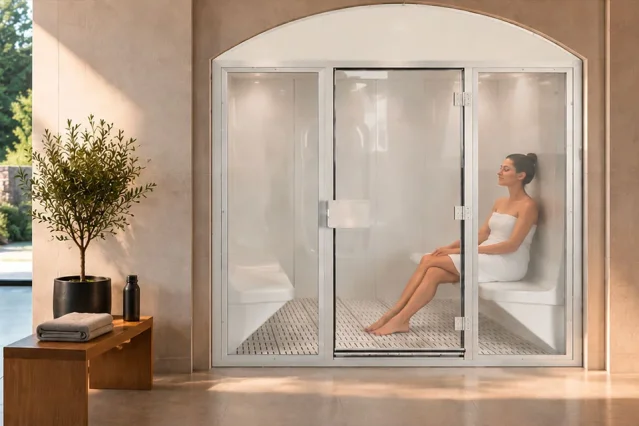
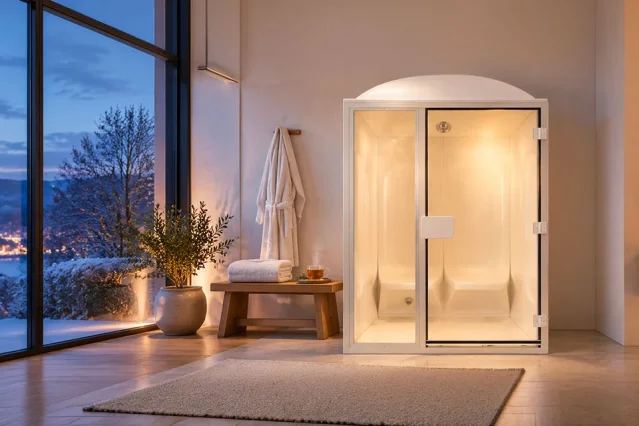
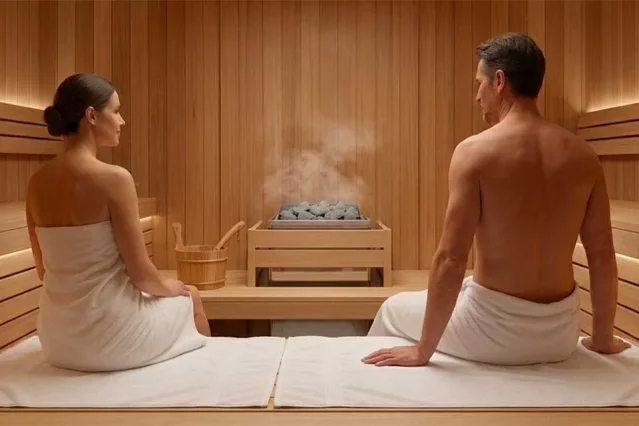
At home and in wellness centres a Turkish bath is a cabin: walls and benches in a material that withstands humidity, a glass door, and a steam generator connected to water, drain and power. It works between 35 and 55 °C with saturated steam, and that is what sets it apart from a Finnish sauna, which runs between 70 and 100 °C at 10 to 20% humidity. The point by point comparison is in the guide on sauna or steam room.
Hammam is the name of the traditional steam bath of the Arab and Turkish world, and the two words are often used as synonyms. A traditional hammam, though, is a sequence of rooms at different temperatures, with washing and massage. A home cabin keeps only one thing from it: the steam.
How it works: from the generator to the steam in the cabin
The heart of the system is the generator, a small boiler. It fills with mains water, a heating element brings it to the boil, and the steam enters the cabin through a low diffuser. Our Turkish bath use sheet gives 5 to 10 minutes from switch on before steam starts, a temperature adjustable between 35 and 55 °C and automatic shut off after 45 minutes, followed by the boiler emptying itself.
Two numbers explain the warnings in every manual. Steam leaving the diffuser can exceed 100 °C, even when the cabin is at 45: that is why the safety sheet wants the outlet at least 150 mm from the seats and 300 mm from the floor. And the generator draws from 3 to 10.5 kW, a power that grows with the cabin: a 2 seat BL-2B Turkish bath measures 120 by 130 cm, a 6 seat BL-6B 190 by 190 cm.
The weak point of every generator is limescale. The boiler needs descaling from once a year to once every two months, depending on how hard your water is: the four bands are in the guide to the Turkish bath at home, linked further down.
What happens to your body inside the cabin
In the heat, the body cools down mainly by evaporating sweat. At 100% humidity sweat stays on the skin and does not evaporate, so that mechanism stalls. The result looks like a paradox: in one study, in 59 °C steam the body heated up more than in 91 °C dry air.
A 2014 study measured it on ten healthy men aged 25 to 28, who had a dry sauna session and, a month later, a steam bath session: each time three 15 minute stays, with 5 minute breaks and a cold shower (Pilch and colleagues, Biology of Sport, 2014). In the steam, at 59 °C and 60% humidity, core temperature and heart rate rose more, with heart rate going from 66 to 138 beats a minute on average, against 126 in the dry sauna, and the heat strain indices were higher too, even though the dry sauna was hotter. The authors conclude that steam is more demanding for the body.
So the heart speeds up, it does not slow down, as you sometimes read. The study has its limits: ten people, young and healthy, and steam hotter and less humid than in a home cabin, which runs between 35 and 55 °C at 100% humidity. But it helps to understand why the times in the use sheet are cautious: 35 to 40 °C and 10 to 15 minute sessions for beginners, 42 to 48 °C and 15 to 20 minutes for regular use, and up to 55 °C and 30 minutes only for people used to the heat.
Turkish bath benefits: what the studies say
Few studies look at the Turkish bath, and almost none measures its benefits. The study above measures the strain on the body, not a health gain. Most research on heat concerns the Finnish sauna, which is a different thing: dry air at almost twice the temperature, with results that cannot simply be carried over to steam.
The research closest to the hammam is a University of Granada study on 22 people, comparing a hammam session with a massage and a placebo and measuring mainly heart rate variability on waking, then sleep, mood and perceived wellbeing. And its hammam is not a steam cabin: it is a circuit of hot and cold pools with a sauna, followed by a manual treatment. On the ClinicalTrials.gov registry it is listed as completed in November 2025 and, as of 16 November 2026, with no results posted.
What remains is a sensation, not a proven health effect. Many people use a Turkish bath for the humid warmth and half an hour of downtime, and that is a fair reason to choose one: it just needs to be called by its name. The use sheet describes the skin as «damp and soft» when you come out, because it has stayed in the steam for a long time.
On breathing, the most common question is about colds. Some people report relief for a blocked nose, but the Cochrane review on heated, humidified air showed neither benefits nor harms in treating the common cold, and with an infection in progress you do not use a Turkish bath: it is all in the guide on the steam room with a cold.
What a Turkish bath does not do: toxins, weight and water retention
Toxins. Sweat is mainly there to shed heat. It contains traces of metals, but a study on 12 university students measured lower concentrations of nickel, lead, copper and arsenic in sweat collected while sitting in a cabin at 45 °C and 40% humidity, so not a steam bath, than in sweat from running on a treadmill (Kuan and colleagues, International Journal of Environmental Research and Public Health, 2022). None of the sources cited in this guide shows that a steam session reduces the amount of metals or toxins in the body.
Weight. The weight you lose in the cabin is sweat water. In the 2014 study the steam bath took off 0.36 kg on average over the whole session, and the use sheet asks you to drink at least half a litre of water afterwards: that weight comes back as you rehydrate.
Water retention and cellulite. Among the sources of this guide there is no study linking the Turkish bath to less water retention, less cellulite or better circulation. If anything, the safety sheet lists severe varicose veins and deep vein thrombosis among the absolute contraindications.
When you should not use a Turkish bath
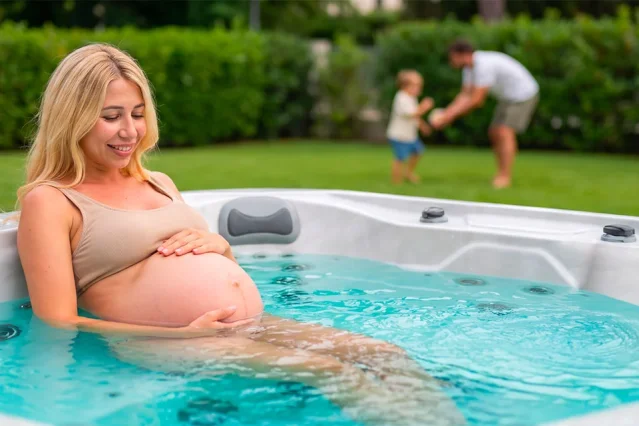
Saturated steam puts heart and breathing under strain, so contraindications matter more than timings. The safety sheet lists among the absolute ones, each with its reason: pregnancy without explicit medical permission, severe heart disease, heart failure, unstable angina, severe arrhythmias, uncontrolled high blood pressure, a heart attack in the last six months, severe respiratory failure, severe uncontrolled asthma, uncontrolled epilepsy, fever or acute infections, contagious infectious diseases, deep vein thrombosis and severe varicose veins.
A second list requires explicit medical approval before use: controlled high blood pressure, diabetes, thyroid problems, mild controlled asthma, dermatitis or skin lesions, claustrophobia, circulation disorders and medication in progress. For children the sheet rules out use under 12 and limits sessions to 5 to 8 minutes between 12 and 16, at 35 to 40 °C and with an adult present; for older people it asks you to see a doctor before the first use and indicates sessions of 10 to 12 minutes at most, at 38 to 43 °C, with someone accompanying them.
You get out straight away, without waiting for the end of the session, at any sign of feeling unwell; with chest pain or tightness, strong dizziness, nausea, palpitations or difficulty breathing the sheet also asks for medical help. If you have a medical condition or are on treatment, the decision is your doctor's before the first session.
A Turkish bath at home or in a wellness centre
In a wellness centre you find it ready, and the rules are the venue's. At home it is an installation: you need water, a drain, a steam vent, a dedicated power line and a ceiling of at least 220 to 230 cm, as explained in the guide to the Turkish bath at home.
You choose the size on how many people use it together, not on the biggest possible: a larger cabin heats more air and needs more power. The BL-2B Turkish bath starts at € 3.370 for 2 seats, the BL-6B at € 4.468 for 6. If you are still between sauna and Turkish bath, the choice depends on how you react to humid heat and on what you can install, and the guide on the differences takes you through the three cases where the choice is forced.
Frequently asked questions
What is a Turkish bath?
A cabin in which a steam generator brings the air to 35 to 55 °C at 100% humidity. It is also called a hammam, although a traditional hammam is a sequence of rooms with washing and massage.
What is a Turkish bath for?
People use it for the humid warmth and for a break to relax, which are subjective sensations. Studies dedicated to the Turkish bath are few and measure the strain on the body during a session, not health benefits.
Does a Turkish bath make you lose weight?
No. The weight lost is sweat water: in a study on ten healthy men, 0.36 kg on average per session, which comes back when you drink the half litre of water the use sheet indicates afterwards.
How long should you stay in a Turkish bath?
According to the use sheet, 10 to 15 minutes for beginners (35 to 40 °C), 15 to 20 for regular use (42 to 48 °C) and up to 30 only for people used to the heat. The system switches itself off after 45 minutes.
How many times a week can you use a Turkish bath?
The use sheet indicates 1 to 2 times a week for beginners, 2 to 3 for regular use and 3 to 4 for experienced users, for a healthy adult. With a medical condition the safety sheet applies, and your doctor's opinion comes first.
Is a Turkish bath good for your skin?
When you come out your skin is damp and soft, because it has stayed in the steam for a long time: it is a sensation, not a treatment. With dermatitis or skin lesions the safety sheet asks for a dermatologist's assessment before use.
What to do, in order
- Take the Turkish bath for what it is: a cabin at 35 to 55 °C and 100% humidity; in one study steam heated the body more than a dry sauna at 91 °C.
- Do not expect a treatment: the available studies measure the strain on the body (heart rate up from 66 to 138 beats a minute on average in steam, in a study on ten men), not health benefits.
- Do not use it to lose weight or to «remove toxins»: the weight lost, 0.36 kg on average, is water that comes back as you drink.
- Read the absolute contraindications in the safety sheet before your first session, and with a medical condition or treatment ask your doctor.
- Start from 35 to 40 °C and 10 to 15 minute sessions, and get out straight away at the first dizziness, nausea or difficulty breathing.
- If you want one at home, check ceiling, connections and power first, then choose the cabin on how many people will use it together.
A frequent mistake is asking the Turkish bath for what it does not do, losing weight or cleansing, and stretching the sessions to get it. The right step is the opposite: start with the lowest temperatures and times in the sheet and go up only if your body handles them well.
For a question about your model or how to use it, there is customer support. The models are in the Turkish bath category, and a few questions about your space and how you will use it narrow down the catalogue. You can read who we are on the about us page.
The guidance in this guide summarises the use and safety sheets published on our support site for the Turkish baths we sell and the sources cited, and it does not replace the manual for your model. Catalogue data (dimensions, seats, prices) is read from the product pages and updates with the catalogue; it remains indicative because it refers to standard configurations. This information does not replace medical advice: if you have a medical condition, are pregnant or are taking medication, consult your doctor before using a Turkish bath.